Category Overview · Dynamic Production Management

Category Overview · Dynamic Production Management
An Overview of Dynamic Production Management
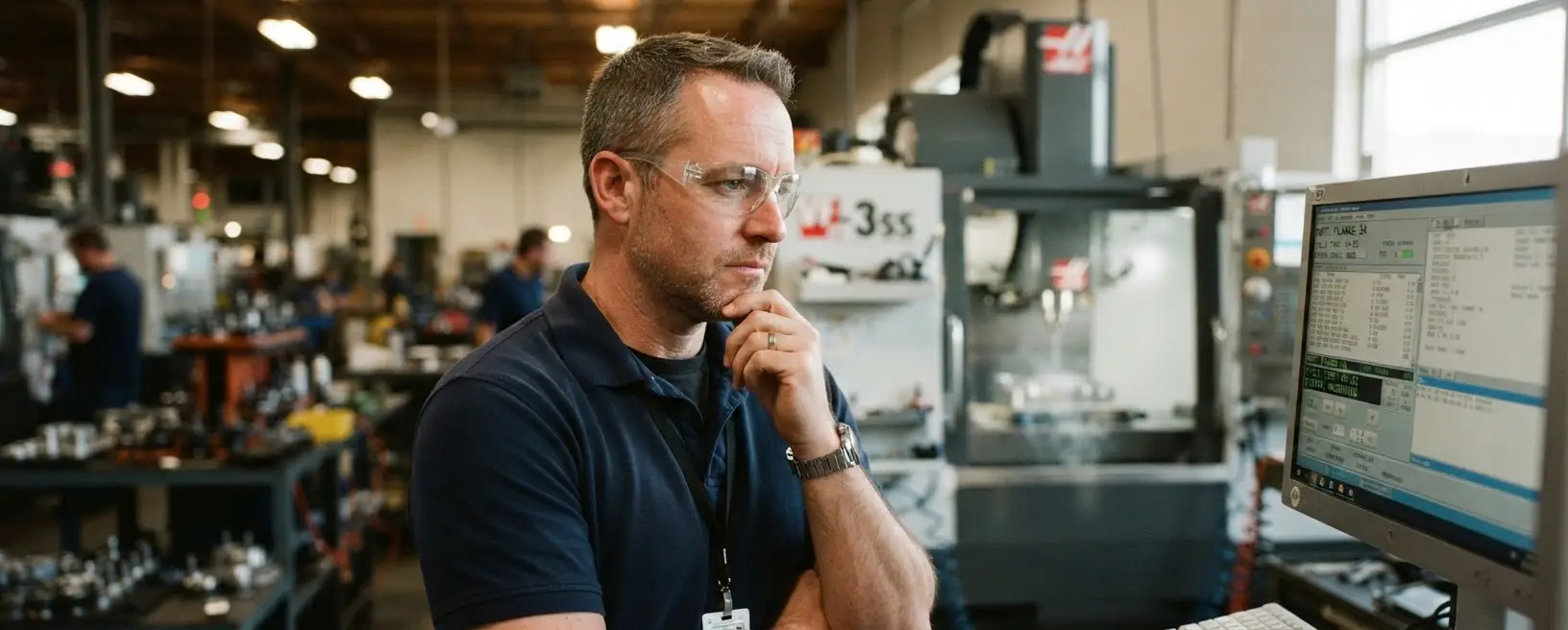
In high-mix environments, the plan starts aging the moment the first job hits the floor.
Most high-mix manufacturers can build a schedule. What they struggle to do is execute production consistently once the day begins. A machine goes down, material doesn't arrive, a job runs long, a customer changes a requirement, and the schedule no longer reflects reality.
Production leaders then spend the shift reacting instead of executing. Every day they face:
Late orders are what customers see. Beneath the surface, execution is what's actually broken. When execution becomes unstable, lead times expand, expedites become the norm, throughput suffers, and customer confidence erodes. Treating the late order doesn't cure the condition that produced it.
When late orders pile up, manufacturers reach for the same remedies. Each helps for a while. None changes how execution is managed.
Adding capacity
Helps… until priorities change.
Spreadsheets
Help… until complexity increases.
Consultants
Help… until they leave.
Tribal knowledge
Helps… until key people aren't available.
Scheduling software
Helps… until reality changes.
For decades the industry has treated this as a scheduling problem, and each generation of tools promised a better schedule:
Whiteboards
Manual visual boards
Spreadsheets
Excel & shared files
ERP scheduling
Inside the enterprise system
APS systems
Advanced planning
Finite scheduling
Constraint-based plans
What's next?
Managing execution itself
Defining the Category
Definition
Dynamic Production Management is a system that continuously evaluates the full production environment and guides decisions in real time, every minute of every hour of every day. It is fundamentally different from creating a static schedule.
Priorities
Updated continuously from current conditions
Materials
True readiness verified, not assumed
Capacity
Real constraints surfaced and managed
Constraints
Identified before they disrupt flow
Delivery risk
Monitored across every open order
| Dimension | Scheduling | Dynamic Production Management |
|---|---|---|
| Primary function | Creates a plan | Manages execution |
| Nature | Static | Dynamic |
| Focus | Due-date focused | Threat-based priorities |
| Update frequency | Periodic updates | Continuous evaluation |
| Visibility | Limited execution visibility | Real-time visibility |
| Posture | Reactive | Proactive |
Scheduling creates a plan. Dynamic Production Management manages reality.
Traditional visibility asks
Knowing what's happening is useful.
Operational visibility asks
Knowing what to do next is transformational.
Dynamic Production Management doesn't replace existing systems. It adds the layer they were never designed to provide.
Business operations and data management
Planning and capacity allocation
The missing layer: managing execution in real time
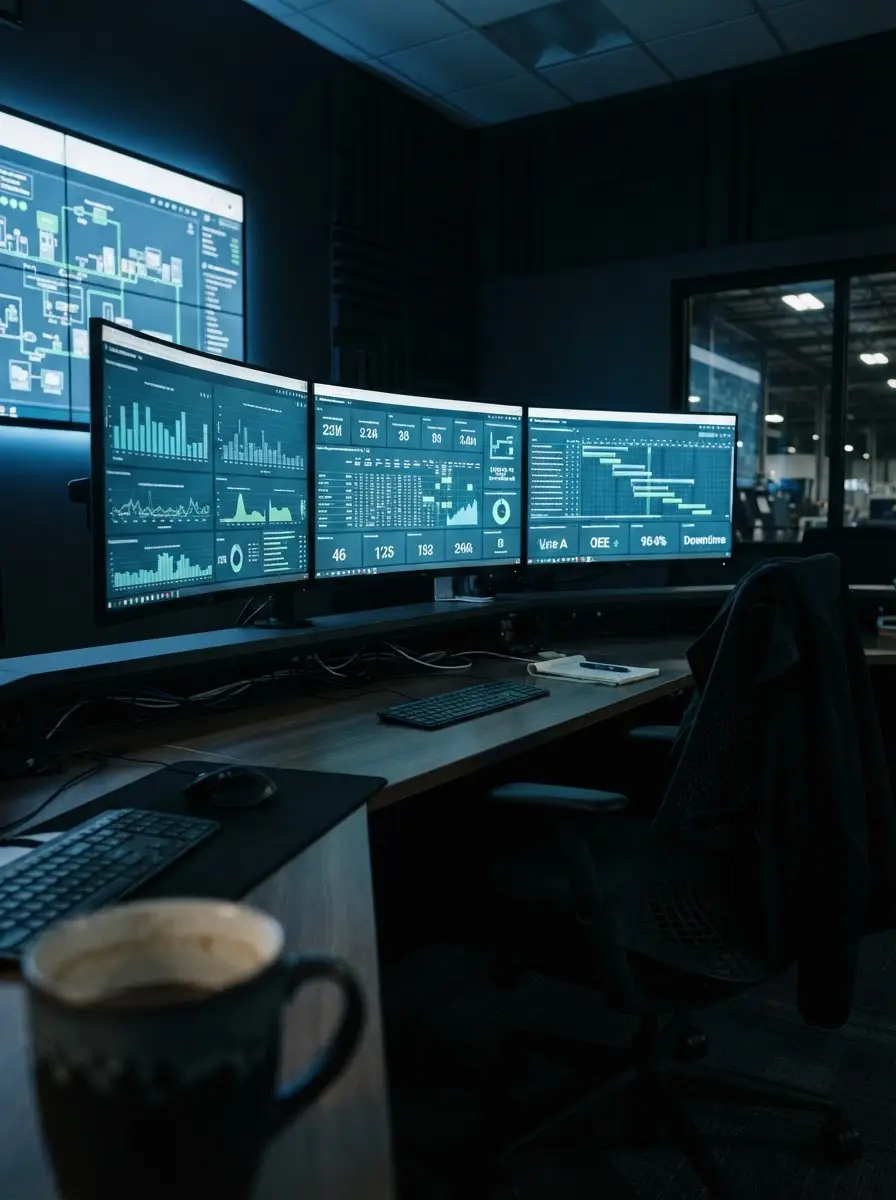
The Category Leader
PFM was built to solve production execution, not scheduling. It uses the current state of the floor to set priorities that update as production changes, and simulates how every order will move through every workcenter, so planners can see bottlenecks coming, test options and quote delivery dates with confidence. It answers four questions no scheduling tool was designed to answer:
Dynamic priorities from real conditions, not static due dates
Real-time status across the entire floor
Readiness verified before work hits the floor
Continuous risk monitoring on every commitment
Trusted by high-mix manufacturers including Alloy Engineering and Hunting Dearborn.